Ratings vs Truth, the Role of the Media in Elections
Once upon a time (before 1980), over 50 companies (many family owned businesses) owned 90% if the US media--newspapers, books, magazines, radio and TV stations. They made money selling advertising and subscriptions, as well as books. Media companies, often making over 10% in profits each year, were typically attractive investments.1
The FCC (Federal Communications Commission) was established as part of the Communications Act of 1934 and is directly responsible to Congress. It replaced the Federal Radio Commission and, among its many purposes:
"For the purpose of regulating interstate and foreign commerce in communication by wire and radio so as to make available, so far as possible, to all the people of the United States a rapid, efficient, nationwide, and worldwide wire and radio communication service with adequate facilities at reasonable charges, for the purpose of the national defense, and for the purpose of securing a more effective execution of this policy by centralizing authority theretofore granted by law to several agencies and by granting additional authority with respect to interstate and foreign commerce in wire and radio communication, there is hereby created a commission to be known as the 'Federal Communications Commission', which shall be constituted as hereinafter provided, and which shall execute and enforce the provisions of this Act." 2Things remained pretty much the same for 50 years, until the Reagan Administration began deregulation rules in 1981. Television licenses were extended from three to 5 years and the number of stations any entity could own rose from 7 to 12. That meant one company could control a market for a longer period of time and buy additional media in that area. Guidelines on how much hourly advertising could be aired were eliminated. In 1987, the "Fairness Doctrine" requiring reasonable attempts to cover contrasting points of view, was abolished.3
A complete overhaul was passed by Congress and signed by President Clinton in the Telecommunications Act of 1996. The goal of the new law was to allow anyone to enter the communications industry and to allow any communications business to compete in any market. 4 What it really did was create a concentration of ownership. The fifty media companies in the 1930's dropped to 10 in 1996, and to 5 in 2005.
With the advent of new technologies, specifically the Internet & streaming content, media companies have been driven by convergence. This means the melding of media with digital technology as well as different types of media companies with each other. For instance, Comcast acquired NBC Universal, thus combining theme parks & a broadcast network with a cable business. This convergence has also meant a huge percent of media is now publicly traded on the stock market. The family-owned business of the past, profiting the family, now must show a profit to appease shareholders.5
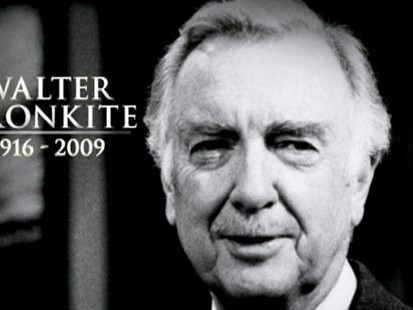
What does all this have to do with ratings and elections? 40 years ago the broadcast media worked under different rules and the goals of different owners. CBS was owned by cigar magnate William Paley, the "Tiffany" network that hosted Amos & Andy, the Ed Sullivan Show, MASH, and All in the Family. Its news division boasted Walter Cronkite, the "most trusted man in America." Like special sales at the grocery story, the news branch of the networks was considered a "loss leader"--not meant to make a profit.
In recent years, this has all changed. Media has always been able to influence the viewer, but different rules now affect the behavior of what we see and hear--and who says it. And news programs are no longer considered loss leaders but face ratings reviews as well. The news cast "talking heads" (reporters) are not only told what to say, but how to say it. https://www.youtube.com/watch?v=PStpvviPgxk.6 They no longer report, but editorialize, not just on the air, but in Tweets and Facebook postings (http://deadline.com/2015/11/cnn-suspends-correspondent-after-tweet-house-vote-syrian-refugees-1201630862/).7
With ratings paramount (higher ratings means media companies can charge higher ad revenues) and stock value at risk, today's news editors weigh the value of the news against what will actually "sell" the news--what will get the most viewers to their media. The proliferation of social media and blogs (such as this one) also means many more pieces of information, sometimes confused as news, are written by people who have no background in journalism. Lacking appropriate research, many of these stories are biased and ground in misinformation. And because of this lack of integrity and truth, we are raising a generation of citizens who don't know the difference.
When it comes to politics, things get trickier because now it's the actual leadership of the country that's affected. For instance, in a 24 hour period last year, CNN mentioned ISIS 61 times, Iran 35 times, John Kerry 18 times, and Donald Trump 239 times.8 Fox News mentioned Trump 25 times more than all the other GOP candidates combined.9 In fact, Fox News has given Trump over $30 million in free airtime.10 Why have they done this? Because apparently Trump increases their ratings and thus their bottom lines.
Does that mean the American public really supports Trump, hence the high profile in the news? Or is it the level of antics of the candidate that intrigues people into watching? Or perhaps a bit of media manipulation? With so much money at stake--and every election this fall--can we buy into this manipulation by continuing to watch, or seek out changes and break up the media stranglehold?
Sources:
1. Shirley Biagi, Media/Impact: An Introduction to Mass Media, 2015, Cengage Learning, pg 13.
2. Text of the Act, from criminalgovernment.com.
3. Media Regulation Timeline, http://www.pbs.org/now/politics/mediatimeline.html
4. Text of the Act, from https://www.fcc.gov/general/telecommunications-act-1996.
5. Biagi, Media/Impact: An Introduction to Mass Media, pg. 12-13.
6. YouTube video, courtesy of RT TV.
7. http://deadline.com/2015/11/cnn-suspends-correspondent-after-tweet-house-vote-syrian-refugees-1201630862/
8. Independent Journal Review, http://ijr.com/2015/07/366095-cnn-loves-it-some-trump-guess-how-many-times-the-network-mentioned-his-name-in-24-hours/.
9. FoxNews, http://www.foxnews.com/politics/2015/12/11/edge-trump-gets-25-times-more-media-mentions-than-gop-field-combined.html
10. http://mediamatters.org/blog/2016/01/12/fox-news-has-given-donald-trump-nearly-30-milli/207912


